Ham Radio Operator Helps Keep The Ozarks Safe
Published 6:19 pm Tuesday, October 13, 2026
When severe weather rolls through the Ozarks, getting accurate information to the right people can make all the difference.
That’s where Brad Stowe comes in.
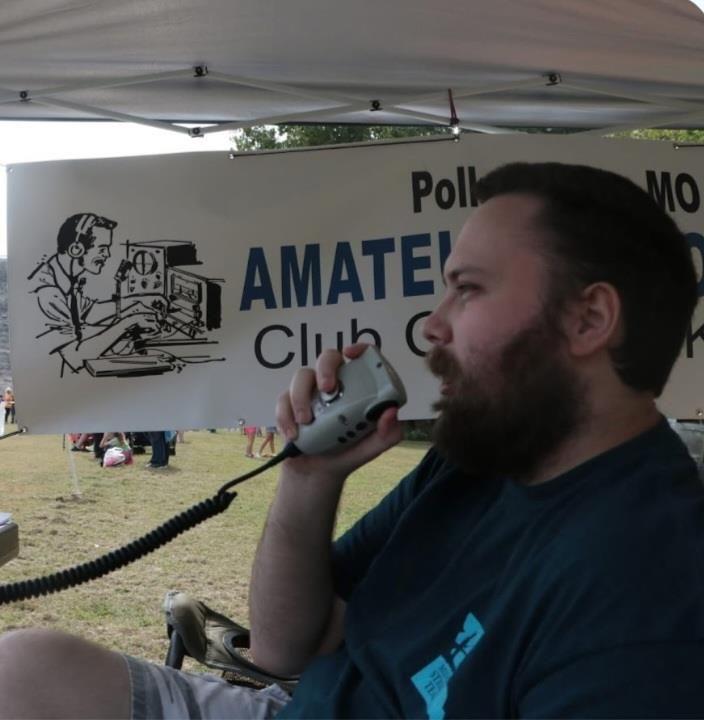
Stowe, a Springfield native who now lives near Pomme de Terre Lake, has spent about a decade involved in amateur radio, better known as ham radio. He’s also been involved in weather reporting for Ozarks First for more than 13 years.
For Stowe, it’s about more than a hobby. It’s about helping people.
Stowe has been interested in weather since childhood. He also had an interest in law enforcement, but his visual impairment led him to explore other ways to serve his community.
Amateur radio turned out to be a good fit.
“I looked at what I can do with what I have to be able to help my community,” Stowe said.
Stowe credits the late Jim Sellers, a longtime regional Skywarn coordinator, with helping spark his interest. He eventually took an amateur radio licensing class in Bolivar and earned his license.
“To me, I got into it for emergency communication,” he said. “The hobby was just a coincidence or a side effect.”
Today, Stowe serves as a net control operator during severe weather. In simple terms, he’s a dispatcher for storm spotters.
When storms develop, trained spotters across the area watch for things like damaging winds, hail, flooding, and signs of possible tornadoes. Their job is to report what is actually happening on the ground, giving the National Weather Service valuable information that radar alone may not provide.
That’s where Stowe plays an important role.
Using amateur radio, he passes along weather warnings, radar updates, and other information to spotters in the field. In return, they radio back what they’re seeing. Stowe then relays those reports to the National Weather Service through its online communication system.
The information helps meteorologists better understand what’s happening as storms move through communities. It can also help emergency managers and broadcasters get timely information to the public.
“I’m the dispatcher,” Stowe explained.
Unlike commercial radio, where information generally goes out to listeners, amateur radio allows operators to communicate back and forth.
“We’re relaying information and taking information,” he said. “It’s a two-way street.”
Stowe is also involved with the Polk County Amateur Radio Club, which provides communications during community events.
Recently, the club helped with a cross-country race near Pomme de Terre Dam. When a runner went down along a difficult section of the course, a radio operator contacted Stowe, who quickly passed the information to the medical team.
It’s another example of how amateur radio can help when communication matters.
Stowe believes more people should consider becoming trained storm spotters. While smartphones make it easier than ever to share weather information, he says knowing what to look for and how to report it accurately is especially important.
“Quite honestly, with smartphones, everybody’s a spotter nowadays,” Stowe said. “So more trained spotters is what we need.”
For those interested in amateur radio, Stowe encourages them to get involved.
The Polk County Amateur Radio Club can be reached through Facebook at facebook.com/K0PLK, by email at K0PLK.ARC@gmail.com, or by calling 417-413-3102.
Stowe can also be reached at KA0KDW@gmail.com.
For Stowe, amateur radio offers something he has always valued: the opportunity to serve his community and help others when it matters most.